
The Iowa House of Representatives has secured the number of signatures needed to convene a special legislative session with the goal of overriding Gov. Kim Reynold’s recent veto of an eminent domain bill impacting CCS projects within the state.

Iowa Gov. Kim Reynolds on June 11 vetoed H.F. 639, a controversial bill that would have effectively prevented CCS projects from being developed within the state. Biofuel stakeholders are applauding her decision.

E-methanol supplies ethanol producers with a unique utilization option in place of carbon capture and sequestration.

The U.S. Department of Energy on May 30 announced it is terminating 24 awards issued by the Office of Clean Energy Demonstrations totaling $3.73 billion. At least two ethanol-related projects are among those impacted by the terminations.
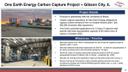
Rex American Resources on May 28 confirmed work continues on the carbon capture and storage (CCS) and capacity expansion projects at its One Earth Energy facility in Gibson City, Illinois. Both projects are expected to be operational next year.
Conestoga Energy on May 28 announced the successful completion of drilling operations for its first Class VI well designed for CCUS. The well is located near the company’s Bonanza BioEnergy ethanol plant in Garden City, Kansas.
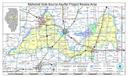
The Illinois House of Representatives on May 20 voted 91 to 19 in favor of a bill that could impact the siting of proposed CCS projects within the state. The Illinois Senate unanimously approved the legislation in April.

The House Ways and Means Committee on May 14 advanced its portion of President Trump’s “big, beautiful” tax bill. The draft legislation amends and extends the 45Z clean fuel production credit but repeals several other clean energy tax credits..

On May 12, the Iowa Senate voted 27-22 to pass HF 639, effectively banning CCS projects in the state. The IRFA said the vote goes against farmers and ethanol producers seeking to unlock ultra-low carbon ethanol markets around the world.

Startup Nataqua hopes to help ethanol producers turn captured carbon dioxide into more on-site ethanol capacity.
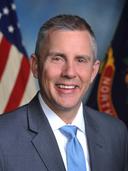
North Dakota Gov. Kelly Armstrong on April 15 signed a bill creating a low-carbon fuels fund that is designed to help the state’s ethanol producers lower the CI of the fuel they produce, which could help producers participate in the SAF market.
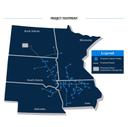
The South Dakota Public Utilities Commission on April 22 denied Summit Carbon Solution’s pipeline application by a vote of 2 to 1. Summit has expressed disappointment with the decision and announced plans to refile its application.

Rex American Resources Inc. released fourth quarter financial results on March 26, reporting increased ethanol sales volumes and progress with the company’s planned carbon capture and storage (CCS) project in Illinois.
The Iowa House of Representatives on March 26 voted 82 to 12 in favor of a bill that aims to ban the use of eminent domain on agricultural land for the development of carbon dioxide (CO2) pipeline projects.
The Iowa House Judiciary Committee on March 6 voted 20 to 1 to approve a bill that aims to ban the use of eminent domain on agricultural land for the development of carbon dioxide (CO2) pipeline projects.

Green Plains Inc. on March 17 announced that construction has commenced on the compression infrastructure for its CCS initiative in Nebraska. The company also announced that it will temporarily idle operations at its CST facility in Iowa.
Preliminary agenda announced for 2025 International Fuel Ethanol Workshop & Expo

By BBI International
March 17, 2025
Ethanol Producer Magazine announced this week the preliminary agenda for the 2025 International Fuel Ethanol Workshop & Expo (FEW) taking place June 9-11, 2025 at the CHI Health Center in Omaha, Nebraska.
Summit Carbon Solutions on March 12 filed a motion with the South Dakota PUC asking the agency to suspend the current schedule for its CO2 pipeline permit application, citing changing circumstances caused by the state’s new eminent domain law.
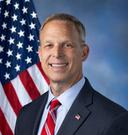
Rep. Scott Perry, R-Pa., on March 6 introduced the 45Q Repeal Act. The legislation aims to repeal the Section 45Q tax credit for carbon capture, utilization and storage (CCUS). The bill, H.R. 1946, is cosponsored by Rep. Ro Kahanna, D-Calif.
South Dakota Gov. Larry Rhoden on March 6 signed a bill to prevent the use of eminent domain for the development of CO2 pipelines. The law specifically targets the CO2 pipeline project under development by Summit Carbon Solutions.
POET and Tallgrass on Feb. 13 announced they have entered into definitive agreements to connect POET’s Fairmont, Nebraska, bioprocessing facility to the Tallgrass Trailblazer carbon dioxide (CO2) pipeline.

Summit Carbon Solutions and Infinium, a leading electrofuels (eFuels) producer, have entered an arrangement for the supply of up to 670,000 metric tons of CO2 annually at a proposed eFuels facility in North Dakota or South Dakota.
Summit Carbon Solutions has filed a legal action to ensure a fair and transparent process for the South Dakota PUC review of its pipeline permit. The company has asked the court to prevent one of the commissioners from participating in the decision.

Representatives of the U.S. biofuels and bioenergy industries are among more than 160 companies, trade groups, labor unions and policy organizations that are calling on federal lawmakers to maintain support for the 45Q tax credit.

A bill introduced in the North Dakota Senate aims to create a low-carbon fuels fund that would help the state’s ethanol producers lower the CI of the fuel they produce, increasing local demand for corn and helping producers access SAF markets.

The South Dakota House of Representatives on Jan. 27 voted 49 to 19 to approve a bill that would prevent the use of eminent domain for the development of CO2 pipelines, in a move opponents say will cause economic harm to the state.
South Dakota lawmakers on Jan. 24 voted 10 to 3 to advance a bill that aims to prevent the use of eminent domain for the development of CO2 pipelines. Representatives of ethanol and SAF producers testified against the legislation.

Green Plains Inc. on Jan. 16 announced that key milestones for the “Advantage Nebraska” carbon strategy have been met. The project, which will sequester CO2 from three of the company’s ethanol plants, remains on track to be operational in 2025.

The PHMSA on Jan. 15 released a proposed rule to implement new safety requirements for CO2 pipelines. Stakeholder concerns regarding the need for updated CO2 pipeline safety regulations has been one issue stalling development of CCS projects.

New technologies are emerging with creative solutions that put carbon emissions to work for ethanol producers.
Advertisement

@ Copyright 2025 - BBI International - All rights reserved.