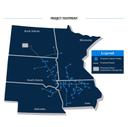
Summit Carbon Solutions announced on Dec. 12 that it has received three Class VI sequestration permits from the North Dakota Industrial Commission (NDIC), marking a critical step forward in the Midwest Carbon Express project.

Summit Carbon Solutions on Dec. 12 announced that the Minnesota Public Utilities Commission has granted a permit for the company’s 28-mile pipeline route through Otter Tail and Wilkin Counties.

Gevo Inc. has announced that its planned acquisition of the ethanol production plant and CCS assets of Red Trail Energy LL passed an important milestone as the equity holders of Red Trail Energy voted overwhelmingly to approve the transaction.
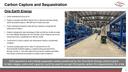
Rex American Resources Inc. on Dec. 3 released fiscal Q3 financial results, reporting the three-month period was the second most profitable quarter in the company’s history. Work on the company’s capacity expansion and CCS projects is ongoing.
Researchers at Johannes Gutenberg University Mainz (JGU) have now presented a method for effectively converting carbon dioxide into ethanol, which is then available as a sustainable raw material for chemical applications.
The Iowa Supreme Court on Nov. 22 upheld Summit Carbon Solutions’ ability to conduct land surveys under Iowa Code section 479B.15, allowing the project to continue its careful planning and development.
Summit Carbon Solutions on Nov. 19 submitted its permit application to the South Dakota Public Utilities Commission. The company’s planned CO2 pipeline project spans 2,500 miles in five states, including 700 miles in South Dakota.
Summit Carbon Solutions on Nov. 15 announced that the North Dakota PUC has granted it a Route Permit, a significant milestone in advancing Summit’s CO2 pipeline project. More than 82% of the easements for the North Dakota route have been secured.

Growth Energy recently worked with the Energy Futures Initiative Foundation, led by former U.S. Secretary of Energy Ernest J. Moniz, on new research detailing pathways to further decarbonize bioethanol.

Alto Ingredients Inc. on Nov. 6 released Q3 financial results, announcing an agreement with Vault 44.01 related to a CCS project in Illinois and indicating the company is considering idling its Idaho ethanol plant in response to falling margins.
South Dakota voters on Nov. 5 rejected a law signed earlier this year that pertains to the development of CO2 pipelines within the state. Summit Carbon Solutions confirmed it still plans to file a permit application with the state later this month.
LanzaTech Global Inc. has announced plans to develop a commercial-scale carbon capture and utilization (CCU) facility at Herøya Industrial Park in Porsgrunn, Norway. The plant will produce ethanol and is expected to begin operations in 2028.
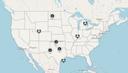
The U.S. EPA on Oct. 15 released 2023 data collected under its Greenhouse Gas Reporting Program, including data on CO2 sequestration volumes at operational carbon capture and sequestration (CCS) projects at three U.S. ethanol plants.
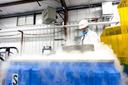
EPM has collected information on 120 U.S. ethanol plants that are capturing their fermentation carbon dioxide—or intend to—for one of three principal purposes: conventional utilization, sequestration or next-gen transformation.

Millions in federal funding is available to help carbon dioxide producers manage their CO2 and maximize their capture.

Increasing the ethanol industry’s market by decreasing the biofuel’s carbon intensity score was a major theme at the 2024 ACE conference as key industry players spoke to the industry's challenges and opportunities.
The American Carbon Alliance announced Indiana Ethanol Producers Association has joined its coalition. The ACA continues to gain momentum as ethanol trade associations across the country unite in support of carbon capture initiatives.
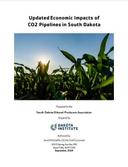
Summit Carbon Solutions’ proposed carbon capture project would add more than $3.26 billion in gross output across South Dakota over 12 years, according to the latest economic analysis from the Dakota Institute released on Sept. 9.

Gevo Inc. on Sept. 12 announced it has entered into a definitive agreement to acquire the ethanol production plant and CCS assets of Red Trail Energy LLC for $210 million. Gevo plans to add net-zero SAF production capacity to the site.

Rex American Resources Inc. released fiscal second quarter financial results on Aug. 27, reporting improved margins. Rex also detailed progress with its CCS project and capacity expansion, which are both underway at One Earth Energy in Illinois.
The Iowa Utilities Commission on Aug. 28 found that Summit Carbon Solutions LLC has substantially complied with the requirements of its June order regarding the company's application for a hazardous liquid pipeline permit.
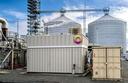
Although ethanol producers are looking ahead to carbon capture and storage as the predominant means of lowering their carbon intensity scores, measures such as energy storage, CHP and electrification can have a substantial impact on CI scores now.

Green Impact Partners Inc. has finalized the carbon credit pathways under the Alberta Technology Innovation and Emissions Reduction program for its flagship project, the Future Energy Park, to be located in Calgary, Alberta.
Summit Carbon Solutions LLC on June 25 achieved a major milestone with the Iowa Utilities Board’s approval of its baseline CO2 pipeline project. Several conditions must be met before Summit is issued a permit and construction can begin.
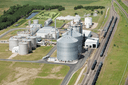
Carbon Clean and AGRA Industries have signed an MOU to provide Carbon Clean’s semi-modular CaptureX technology to companies in agriculture-related sectors, including the production of biofuel, ethanol and sustainable aviation fuel (SAF).

Brazil-based FS announced it has completed technical studies that prove suitable geological conditions for injecting carbon dioxide (CO2), emitted in the fermentation phase of biofuel production, in the subsoil.
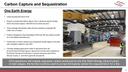
Rex American Resources Corp. on May 22 reported that the company achieved near-record financial results during its fiscal Q1 2024. The company also announced it secured 100% of the rights of way for its planned 6-mile carbon pipeline.

As the first-ever ethanol producer to deliver carbon removal credits to the voluntary market, Red Trail Energy and its partners are creating a blueprint for others to follow.
Anew Climate LLC has announced a marketing agreement with Summit Carbon Solutions. Under the terms of the agreement, Anew will market carbon dioxide removal credits generated from Summit biomass with carbon removal and storage (BiCRS) project.

Carbon dioxide has many merchant market applications, ranging from the medical industry to agriculture to food and beverage.
Advertisement

@ Copyright 2025 - BBI International - All rights reserved.